
7 practical tips for managing runoff and erosion
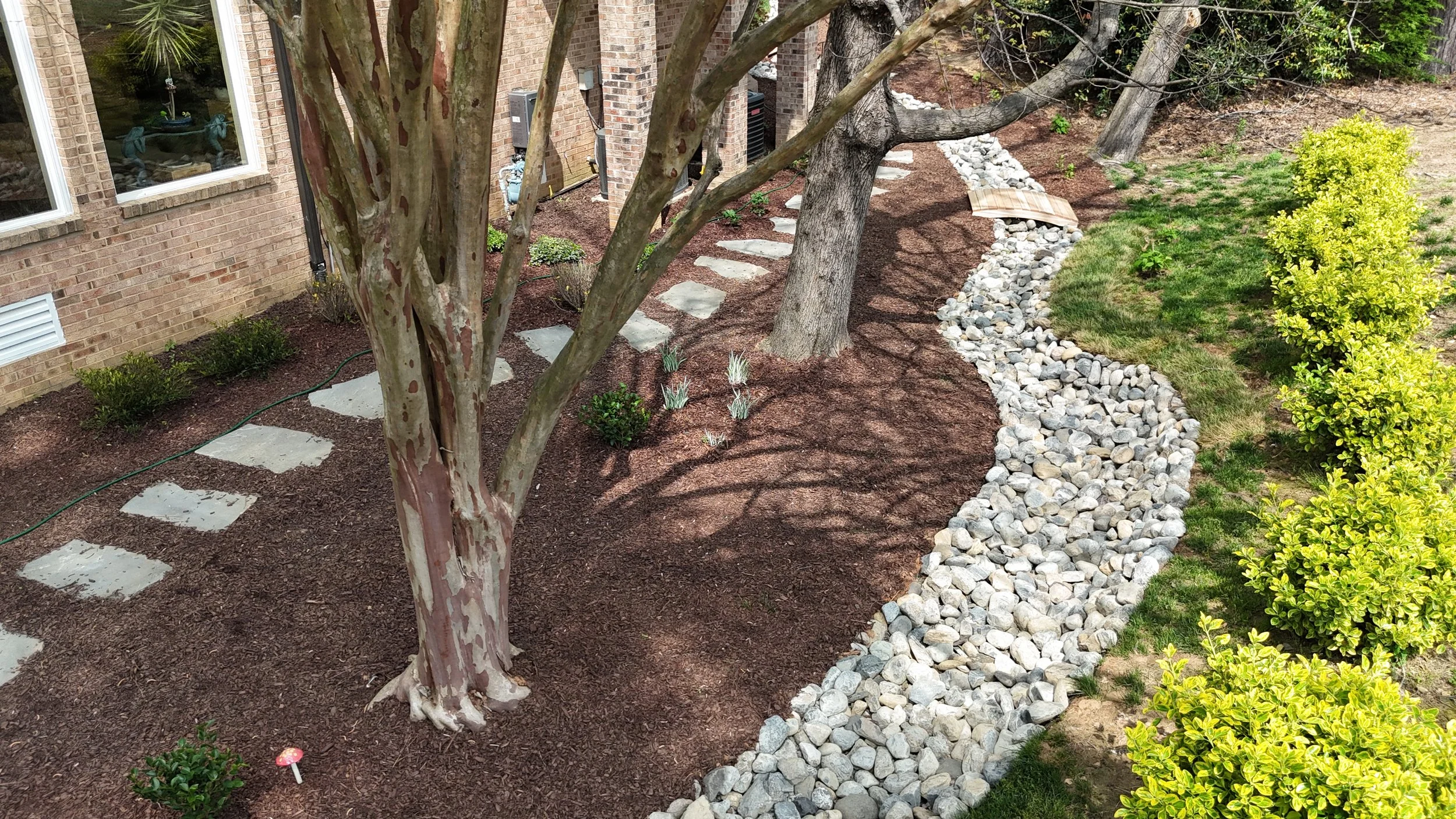
Managing Runoff and Erosion During Heavy Rainfall
If you’ve ever walked outside after a hard rain and noticed washed-out mulch, pooling water, or bare patches where grass used to be, you already know how quickly a yard can take a hit. Managing runoff and erosion during heavy rainfall is one of the biggest challenges homeowners face, especially here in areas that see sudden downpours.
The good news is that with a bit of planning and the right approach, you can protect your lawn, keep your soil where it belongs, and even improve the overall health of your landscape.
Let’s walk through how to properly prepare for heavy rainfall and what you can do to stay ahead of erosion before it becomes a bigger problem.
Why Heavy Rainfall Causes Runoff and Erosion
Before jumping into solutions, it helps to understand what’s happening.
When rain falls faster than your soil can absorb it, water begins to move across the surface. As it flows, it picks up loose soil, mulch, and debris. Over time, this leads to:
Washed-out garden beds
Exposed roots and thinning grass
Uneven ground and drainage issues
Loss of nutrient-rich topsoil
That’s why managing erosion isn’t just about appearance. It’s about protecting the foundation of your entire landscape!
How to Prepare for Heavy Rainfall
Preparation makes all the difference. A yard that’s designed to handle water will always outperform one that isn’t.
Here are a few foundational strategies to consider:
Improve soil health so it absorbs water more efficiently
Identify low spots where water collects
Make sure downspouts direct water away from your home and lawn
Keep beds and edges well-defined to slow water movement
Think of your yard like a system. When each part works together, runoff becomes much easier to control.
7 Practical Tips for Managing Runoff and Erosion
1. Build Up Healthy, Absorbent Soil
Healthy soil acts like a sponge. Compacted soil, on the other hand, sheds water almost immediately.
To improve absorption:
Add compost or organic matter regularly
Aerate your lawn to relieve compaction
Avoid heavy foot traffic when the ground is wet
This is one of the most effective long-term solutions for managing runoff and erosion during heavy rainfall.
2. Use Mulch to Protect Bare Soil
Mulch does more than make your beds look clean. It plays a big role in managing erosion.
A good layer of mulch (3-4 inches):
Reduces the impact of heavy rain hitting the soil
Slows down water movement
Helps retain moisture during dry periods
Aim for about 3 to 4 inches of mulch in planting beds, and refresh it as needed.
3. Install Strategic Drainage Solutions
If water has nowhere to go, it will find its own path, and that usually leads to erosion.
Depending on your yard, consider:
French drains for redirecting water underground
Dry creek beds for a natural drainage look
Catch basins in areas prone to pooling
These solutions not only help manage erosion but also improve the usability of your outdoor space.
4. Add Ground Cover and Deep-Rooted Plants
Plants are one of the best natural defenses against erosion.
Deep roots hold soil in place and help absorb excess water. Some great options include:
Ground covers for slopes and open areas
Native grasses with strong root systems
Shrubs that anchor soil in problem zones
Greater plant coverage reduces the amount of soil exposed to erosion.
5. Create Defined Edging and Borders
Water tends to follow the path of least resistance. Without structure, water can easily cut through beds and lawn areas.
Adding edging or borders helps:
Keep mulch and soil contained
Slow down water flow
Maintain clean, defined spaces
Materials like stone, metal edging, or pavers work well for both function and appearance.
6. Address Slopes with Terracing or Retaining Walls
Sloped yards are especially vulnerable during heavy rainfall.
Breaking up a slope into smaller, level sections can significantly reduce runoff speed. This can be done with:
Retaining walls
Terraced planting beds
Step systems integrated into the landscape
These features not only help manage runoff and erosion during heavy rainfall but also add visual interest to your yard.
7. Redirect Downspouts and Roof Runoff
One of the most overlooked causes of erosion is roof runoff.
If your downspouts dump water directly into your yard, you’re likely dealing with unnecessary erosion.
Simple fixes include:
Extending downspouts away from the foundation
Directing water into drainage systems or natural areas
Using splash blocks to disperse water flow
This small adjustment can make a big difference.
Common Mistakes to Avoid
Even with the best intentions, a few missteps can make erosion worse:
Overwatering your lawn, especially before storms
Leaving soil exposed for long periods
Ignoring small drainage issues until they grow
Using the wrong type of mulch that easily washes away (Triple shred tends to hold better)
Staying proactive is key when it comes to managing erosion effectively.
Final Thoughts on Managing Runoff and Erosion During Heavy Rainfall
Heavy rain doesn’t have to mean a damaged yard. With the right approach, you can turn a problem into an opportunity to build a stronger, more resilient landscape.
Start small if you need to. Improve your soil, add mulch, and take a closer look at how water moves through your yard. From there, you can layer in more solutions as needed.
If you’re ready to take control of your landscape, now is the perfect time to start managing runoff and erosion before the next storm rolls in!
By: Lucio S.