
Can a New Patio Make Your Drainage Worse? What Homeowners Should Know Before Installing Hardscapes
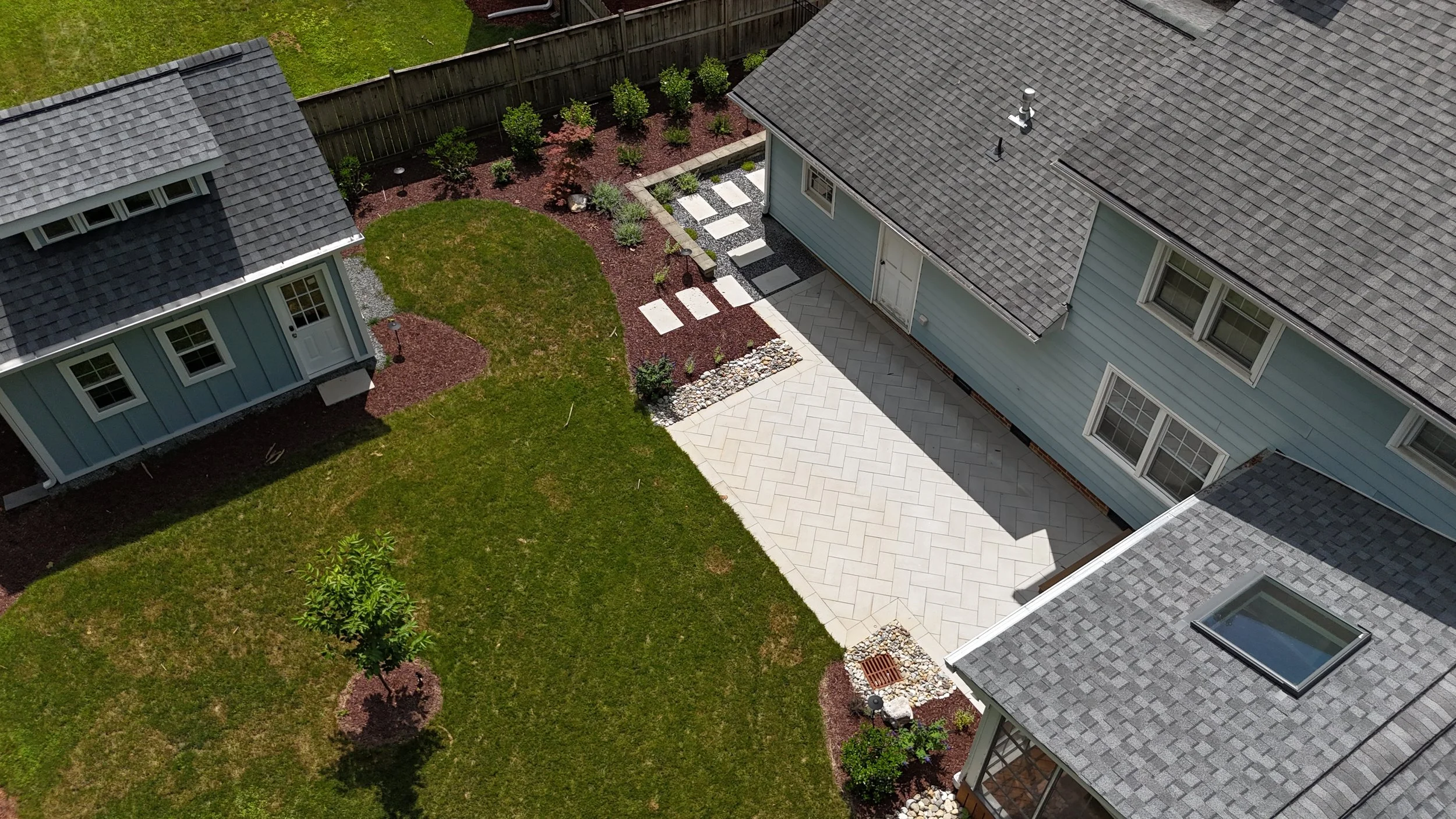
A new patio can completely transform your backyard, giving you a beautiful space to relax, entertain, and enjoy the outdoors. But there's one important detail homeowners often overlook...where will the rainwater go?
Believe it or not, installing a new patio can sometimes create drainage problems or make existing ones worse.
Patios, walkways, and retaining walls change how water moves across your property. Without proper planning, they can lead to standing water, soil erosion, soggy lawns, and ultimately costly repairs.
For North Carolina homeowners, especially those dealing with clay-rich soil and heavy rainfall, proper drainage planning is an essential part of any successful hardscape installation.
How Can a New Patio Affect Your Yard's Drainage?
Before installing a patio, rainwater naturally follows the slope of your yard. Some of it soaks into the soil, while the rest flows toward lower areas.
Adding a patio can change that process. Traditional concrete and conventional paver patios typically shed water across their surfaces rather than allowing it to soak directly into the ground.
Without proper grading, that runoff can cause:
Standing water: Puddles forming on or around the patio.
Soil erosion: Water washing away mulch, dirt, or gravel.
Soggy lawns: Excess runoff collecting in nearby grassy areas.
Foundation concerns: Water being directed toward your home.
Settling pavers: Poor drainage contributing to movement beneath the patio.
The good news is that these issues can often be prevented with proper planning!
6 Tips to Prevent Patio Drainage Problems
1. Observe Your Yard After Heavy Rain
Before installing a patio, pay attention to how water moves across your property.
Look for:
Areas where water tends to pool.
Areas where downspouts discharge.
Low spots that remain soggy.
Excess water entering from neighboring properties.
Understanding existing drainage patterns helps prevent surprises after installation.
2. Make Sure Your Patio Has the Proper Slope
A patio might look perfectly level, but it generally needs a slight slope to allow rainwater to drain.
A commonly used guideline is approximately a quarter inch per foot, although the appropriate slope depends on the patio design and site conditions.
The goal is simple: direct water away from your home and toward an appropriate drainage area.
3. Don't Forget About Downspouts
Your roof collects a surprising amount of water during heavy rainfall, and downspouts can concentrate that water in one location.
If a downspout empties near your new patio, it may create drainage issues.
Possible solutions include:
Managing the downspouts underground.
Redirecting the downspouts toward suitable discharge areas.
Installing catch basins or channel drains where needed.
Addressing these concerns before installation can save time and money.
4. Consider Your Entire Backyard
Your patio doesn't exist on its own. It interacts with surrounding lawns, planting beds, retaining walls, and walkways.
For example, installing a patio next to a raised planting bed could change how water flows through that section of your yard.
A good landscape design considers how all these features work together, not just how they look individually.
5. Understand Your Soil Conditions
Throughout the Triangle area of North Carolina, clay-rich soil is common.
Because clay tends to drain slowly, heavy rainfall may leave water sitting on the surface longer than expected.
That's why proper base preparation, grading, and drainage planning are especially important when installing patios in our region.
6. Fix Existing Drainage Problems First
If your backyard already has standing water, installing a patio probably won't solve the issue by itself.
Depending on the property, solutions may include:
Regrading areas that need it.
Installing catch basins or dry creek beds.
Redirecting downspouts.
Installing a French drain.
Addressing drainage concerns before installing new hardscapes is much easier than making corrections afterward.
Warning Signs Your Patio Has a Drainage Problem
Already have a patio? Keep an eye out for these common warning signs:
Persistent puddles: Water repeatedly collecting in the same spots.
Erosion: Soil or mulch washing away along patio edges.
Uneven pavers: Sections of the patio beginning to sink, shift, or settle.
Soggy grass: Lawn areas remaining saturated long after rainfall.
Water near your foundation: Runoff consistently moving toward your home.
Not every issue requires rebuilding your patio. Sometimes a grading adjustment or downspout extension can make a significant difference.
What Should You Ask Before Installing a New Patio?
Before hiring a hardscape contractor, consider asking:
How will this patio affect my yard's existing drainage?
Where will rainwater flow once the patio is installed?
Will nearby downspouts need to be redirected?
How will the patio base be prepared for our soil conditions?
Are any additional drainage improvements recommended?
A knowledgeable contractor should be able to explain how the installation will manage water and protect the surrounding landscape.
Final Thoughts: A Beautiful Patio Should Function Just as Well as It Looks
A new patio should enhance your backyard, not introduce drainage issues down the line.
Proper grading, thoughtful design, and understanding your property's existing conditions can make all the difference.
For North Carolina homeowners, especially those dealing with clay soil and heavy rainfall, taking drainage into consideration before construction begins is one of the smartest ways to protect their hardscape investment.
By: Lucio S.