
Hardscape Maintenance to Prevent Winter Damage
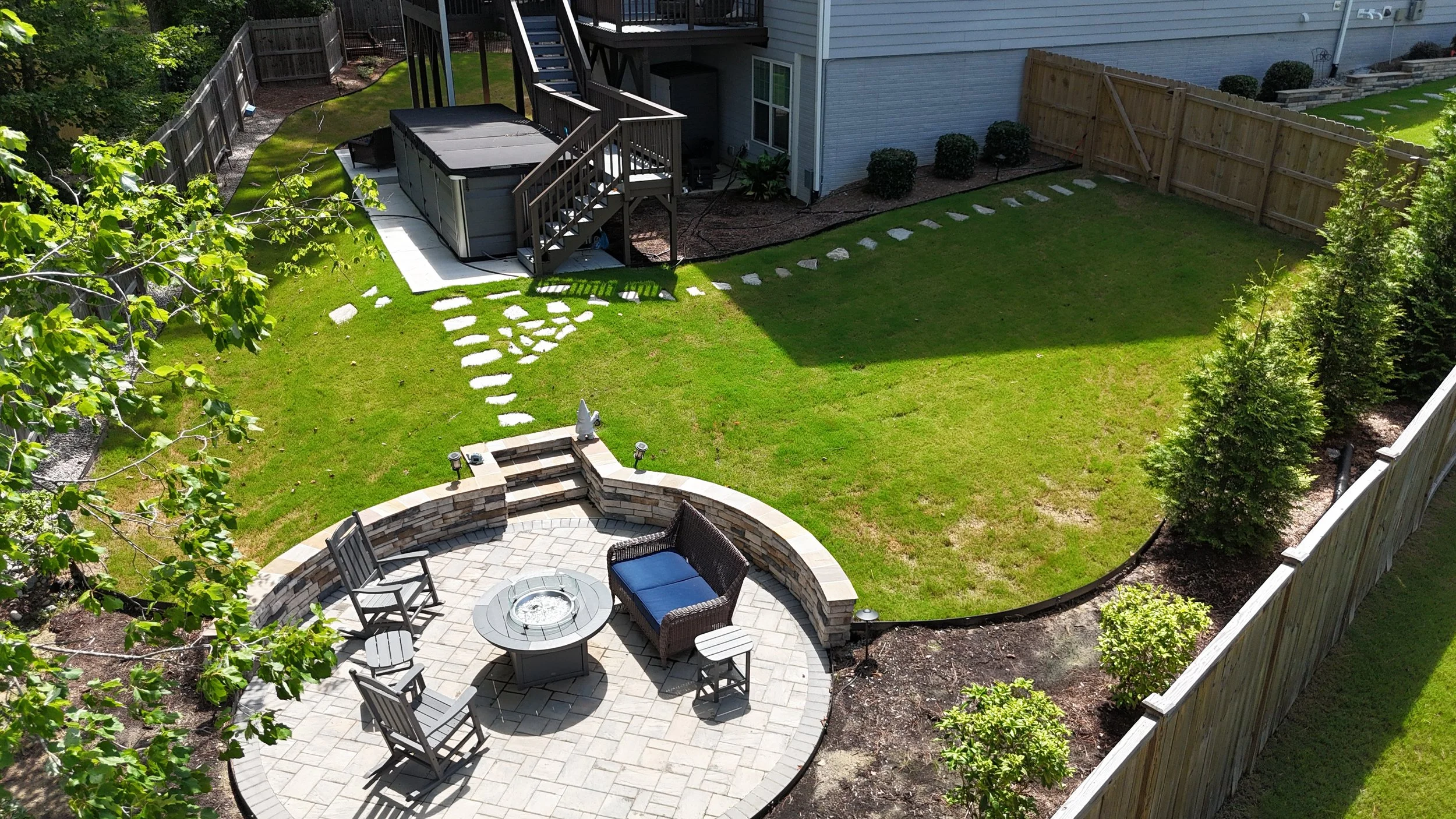
Your patio, walkways, retaining walls, and other hardscape features are built to spend every season outdoors. That doesn't mean they're completely maintenance-free.
As temperatures begin to drop, moisture becomes one of the biggest concerns for patios and other hardscape surfaces. Water can settle into joints, cracks, and low areas. When temperatures fall below freezing, that moisture can freeze, meaning it expands and contributes to movement or deterioration over time. Continuous freeze-thaw cycles are especially important to consider when maintaining pavers and other concrete surfaces.
Here in North Carolina, we may not deal with months of heavy snow, but winter temperatures can still fluctuate enough to put outdoor surfaces through repeated freezing and thawing.
A little preventative maintenance in the fall can go a long way. If you want to protect your outdoor living space and avoid unnecessary repairs, these hardscape maintenance tips to prevent winter damage are a great place to start!
Why Hardscape Maintenance Before Winter Matters
Winter hardscape maintenance is mostly about controlling moisture and addressing small problems before colder weather makes them worse.
Think about a slightly sunken section of a paver patio. During a summer rainstorm, you might notice a puddle there and not think much of it. During winter, however, that same puddle can freeze. If the area repeatedly collects water and goes through the freeze-thaw cycles, movement and deterioration become more likely.
Routine paver patio maintenance can also help identify missing joint sand, drainage problems, loose pavers, cracks, and other issues while they're still relatively manageable.
The good news is that preparing your hardscape for winter doesn't have to be complicated or stressful.
1. Give Your Hardscape a Thorough Cleaning
One of the easiest pieces of hardscape maintenance to prevent winter damage is simply keeping the surface clean.
Leaves, pine needles, sticks, soil, and other organic material can collect on patios and walkways throughout the fall. When that material gets wet and sits on the surface for extended periods, it can contribute to staining and discoloration.
Before winter arrives:
Blow leaves and debris from patios and/or walkways
Remove any dirt that has accumulated along paver joints
Clean existing stains before they have enough time to set
Clear debris away from drains and drainage openings
Remove weeds or unwanted growth between pavers
You don't need to make your patio look brand new every fall. The goal is simply to start winter with a clean surface that isn't holding unnecessary dirt, leaves, or moisture.
2. Check Your Patio and Walkways for Drainage Problems
Proper drainage is one of the most important parts of winter hardscape protection.
Take a walk around your property during or shortly after a good rain. Look for areas where water collects instead of draining properly.
Pay particular attention to:
Low spots in patios
Areas near retaining walls
Walkways
Downspouts that discharge directly onto hardscapes
Drainage channels covered by leaves or debris
Standing water is worth addressing prior to freezing temperatures arriving. Industry guidance for winterizing pavers specifically recommends correcting uneven areas and directing downspout water away from hardscape surfaces when possible.
Sometimes the fix is as simple as clearing a clogged drain or extending a downspout. Other situations may require resetting pavers or correcting the grade.
3. Inspect Pavers for Settling or Movement
Pavers are popular partly because individual units can often be adjusted when movement occurs. That doesn't mean you should ignore a paver that's beginning to sink or rise.
Walk across your patio, driveway, and paver walkways and look for:
Uneven pavers
Sunken areas
Raised edges
Widening joints
Loose border pavers
Areas that rock when stepped on
Correcting uneven pavers before winter can reduce places where water collects and freezes. It can also make winter maintenance easier because raised edges are less likely to catch a shovel or other snow-removal equipment.
Catching these problems early is usually much easier than waiting until a larger section needs attention.
4. Check and Replenish Paver Joint Sand
Don't overlook what's between your pavers.
Joint sand plays an important role in keeping an interlocking paver system stable. Over time, rainfall, cleaning, runoff, and regular use can reduce the amount of material within those joints.
Before winter, inspect the patio for noticeably low or empty joints. Depending on the type of paver system, replenishing the appropriate joint material can help maintain stability and reduce movement. Polymeric sand is commonly used in applicable paver installations to help stabilize joints and resist erosion.
If you're unsure which joint material was originally used, check with your hardscape installer before adding something new. Not every product works for every patio or natural stone installation.
5. Repair Small Cracks Before They Become Bigger Problems
A tiny crack in fall can become a much more noticeable problem after repeated exposure to water and temperature changes.
Check concrete patios, steps, walls, and other hardscape surfaces for cracks, chips, or failing joints.
The basic principle is simple: limit opportunities for water to enter vulnerable areas before freezing weather arrives.
Small cosmetic cracks aren't always a sign of a serious structural issue. However, cracks that continue to widen, areas that have shifted noticeably, or retaining walls showing movement deserve much closer attention.
When something doesn't look correct, addressing it sooner is generally a much better decision than waiting to see what another winter does to it.
6. Consider Whether Your Pavers or Stone Need Sealing
Paver sealing before winter can be helpful for certain hardscape materials, but it isn't something that should automatically be done every year.
A suitable hardscape sealer can help reduce moisture absorption and protect against staining, depending on the material and product being used. Belgard, for example, recommends periodic sealing as part of its winter paver care guidance.
Before sealing anything, make sure the product is appropriate for your particular surface.
Concrete pavers, natural stone, poured concrete, and other materials don't necessarily require the same products or maintenance schedule. If the surface has already been sealed, you'll also want to consider the condition and type of the existing sealer.
When in doubt, ask your installer or a hardscape professional before applying a new product.
7. Redirect Water From Gutters and Downspouts
Your hardscape may be perfectly installed, but water coming from elsewhere on the property can still create issues.
Downspouts are a common example.
If a downspout empties directly onto a patio or walkway, every rain sends additional water across the surface. In cold weather, that water can collect and potentially...you guessed it, freeze!
As part of your fall hardscape maintenance checklist, watch where your downspouts discharge. When necessary, redirect water toward an appropriate lawn, landscape bed, or drainage system rather than allowing it to continually flow across the patio.
Good drainage doesn't just protect your hardscape during winter. It's a key part of protecting your landscape throughout the year.
8. Be Careful With Ice Melt and De-Icing Products
When an icy morning arrives, it's tempting to grab whatever bag of ice melt is sitting in the garage.
Be careful!
Different concrete and paver manufacturers have specific recommendations regarding de-icing chemicals, and some products can contribute to surface deterioration.
The safest and best approach is to check the recommendations provided by your paver, stone, or concrete manufacturer before applying a de-icer.
Sand can also be useful when the goal is improving traction rather than melting the ice.
9. Use the Right Tools for Snow and Ice Removal
We don't see huge snow totals every winter in the Triangle Area, but it only takes one storm to reach for the nearest shovel.
If you're removing snow from a paver patio or walkway, avoid aggressively scraping the surface or catching raised paver edges.
A plastic shovel is generally a better choice for residential patios than repeatedly scraping pavers with a sharp metal shovel.
10. Move or Check Heavy Patio Items
Large planters, grills, furniture, fire features, and decorative pieces can remain in the same spot for months without much movement.
Before winter, move them and take a quick look underneath them.
Heavy objects can contribute to staining and may become more problematic when they're sitting over an already low or unstable area.
You don't necessarily need to empty the entire patio. Instead, move what makes sense, clean underneath it, and make sure you're not covering drains or areas that already struggle with moisture.
A Simple Fall Hardscape Maintenance Checklist
If you want to keep things simple, walk your property before the first stretch of freezing weather and check these areas:
Clean leaves, dirt, and organic debris from hardscape surfaces
Check for any standing water and drainage issues
Inspect pavers for settling, shifting, or raised edges
Look for missing or deteriorated joint sand
Inspect concrete and masonry for cracks
Redirect downspouts away from hardscapes
Determine whether your hardscape needs professional cleaning or sealing
Store heavy seasonal items when appropriate
Keep surface-safe winter maintenance tools ready
You don't have to spend an entire weekend doing it. Even a 20-minute inspection can help you spot something you otherwise wouldn't notice until next spring.
Protect Your Hardscape Investment This Winter
Patios, walkways, retaining walls, and other hardscape features are long-term investments in your outdoor living space. Taking care of them shouldn't stop when summer ends.
The best approach to hardscape maintenance to prevent winter damage is preventative. Keep surfaces clean, pay attention to drainage, address movement early, maintain joints, and use appropriate products when freezing weather arrives.
Here in the Triangle Area, winter can be a bit unpredictable. One week it'll feel like fall and the next can bring overnight freezing temperatures. Preparing your hardscape ahead of time means you'll have one less thing to worry about when those temperature swings arrive.
Take a walk around your property this fall and give your hardscapes a quick inspection. If you notice settling, drainage concerns, damaged pavers, or another hardscape issue that needs professional attention, addressing it before winter can help protect your investment for the seasons ahead.
By: Lucio S.