
Your Backyard Has Dead Space. Here’s What to Do With It.
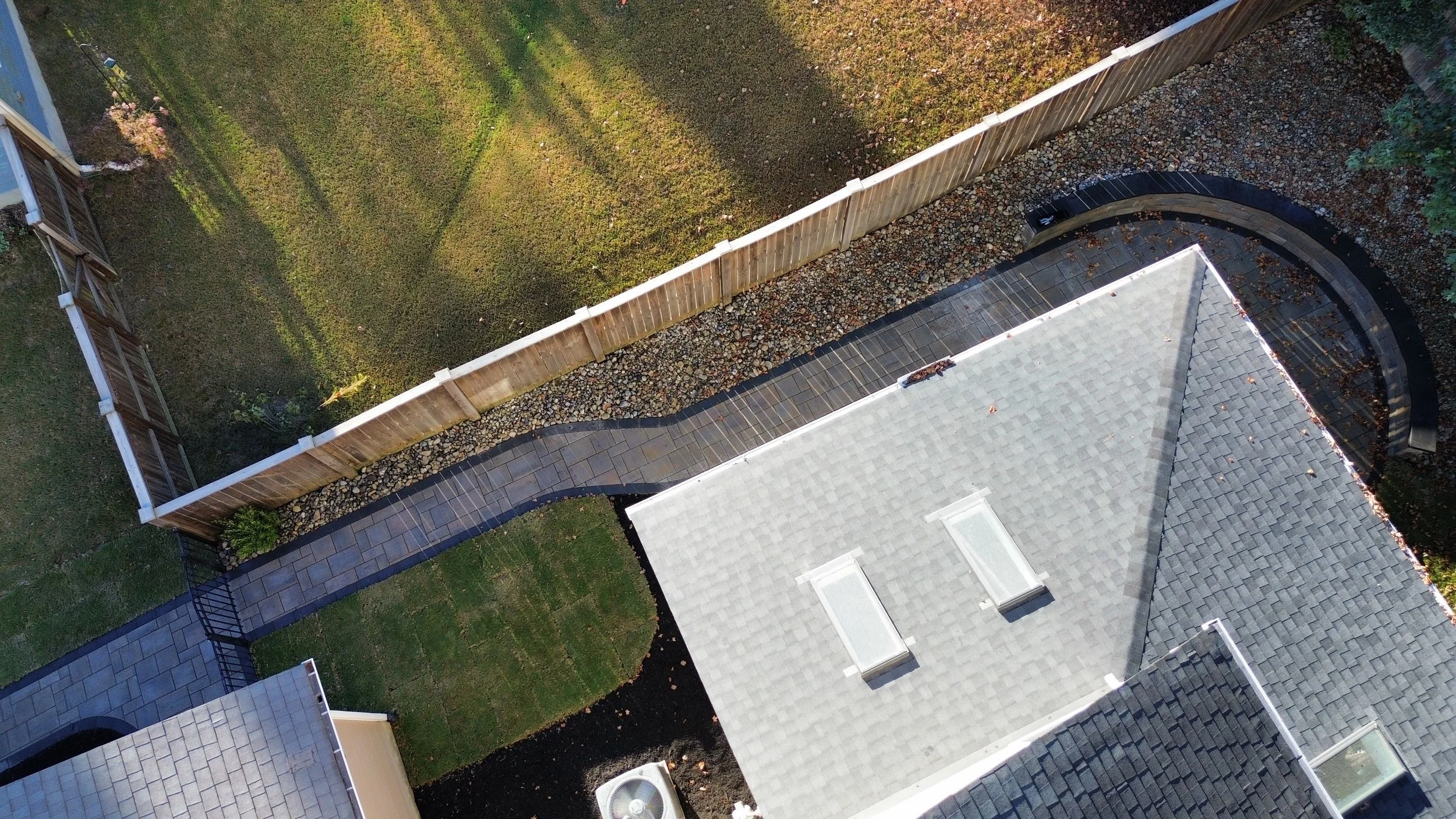
Most backyards have one.
It might be the awkward corner behind the patio where nothing seems to belong. Maybe it's the narrow strip between the house and fence that you only walk through when you need to drag the trash cans out. Or perhaps it's that shady area underneath a mature tree where you've tried growing grass three times and finally given up.
We call these areas dead space, but in most cases, there's nothing actually wrong with them. They simply haven't been given their purpose yet.
One of the biggest differences between a backyard that feels complete and one that feels unfinished is how those awkward areas are handled. Good landscape design isn't just about installing a beautiful patio, planting trees, or creating a great lawn. It's about making the entire property feel intentional.
If you've been wondering what to do with dead space in your backyard, don't assume you need a major renovation. Sometimes a pathway, a few carefully selected plants, decorative stone, lighting, or a small seating area is enough to completely change how that part of your property feels.
Here are some of our favorite ways to put those forgotten spaces back to work.
1. Start by Asking Why the Space Isn't Being Used
Before buying anything, figure out why the area became dead space in the first place.
This sounds simple, but it's an important part of backyard landscape design.
Walk through the area and ask yourself a few questions:
Is the area too shady to grow grass?
Does water collect there after heavy rain?
Is it difficult to access?
Is it too small for furniture?
Is the grade sloped?
Are tree roots competing with plants and turf?
Does the area simply have no reason for anyone to visit it?
Once you understand the problem, the solution becomes much easier.
For example, if grass repeatedly struggles underneath a mature tree, installing more sod may simply restart the same cycle. A shade-tolerant planting bed, mulch, decorative stone, or another groundcover may make considerably more sense.
The goal isn't to force every part of the yard to behave the same way. It's to design each area around the conditions that already exist (take the path of least resistance).
2. Turn an Awkward Corner Into a Small Destination
One of our favorite backyard landscaping ideas is surprisingly simple: give an unused corner a reason to exist.
You don't necessarily need another large patio.
A small destination could be:
Two Adirondack chairs around a small table
A wooden or aluminum bench surrounded by plants
An intimate fire pit area (where appropriate)
A hammock between trees
A small gravel sitting area
A garden feature or decorative boulder
A quiet reading area
A few chairs positioned toward a particularly nice view
Think of your backyard almost like the inside of your home. Your living room has a purpose. Your kitchen has a purpose. Your bedroom has a purpose.
Your outdoor spaces can work the same way.
When an awkward backyard corner becomes somewhere you'd actually want to walk to, it stops feeling like leftover square footage.
3. Make Narrow Side Yards Part of the Design
If you're looking for side yard landscaping ideas, start with the narrow strip running between your home and property line.
These areas are some of the most commonly overlooked parts of residential landscapes. They're often too narrow for a lawn to feel useful, and depending on the home, they may not receive enough sunlight.
That doesn't mean they're useless!
A side yard can become a beautiful transition between the front and backyard.
Consider Adding a Walkway
Stepping stones, flagstone, pavers, decorative gravel, or another appropriate material can turn an otherwise forgotten side yard into an intentional pathway.
Then soften it with landscaping.
Depending on sunlight and site conditions, you could incorporate planting beds, ornamental grasses, shade-tolerant plants, groundcovers, or strategically placed containers.
The difference can be dramatic.
Instead of walking through the "side of the house," you're walking through another part of the landscape.
4. Stop Fighting Areas Where Grass Doesn't Want to Grow
This is a huge.
Sometimes homeowners spend years trying to grow grass in an area that simply isn't suited for turf.
Heavy shade, compacted soil, mature tree roots, excessive moisture, poor drainage, and heavy foot traffic can all make maintaining healthy grass difficult.
If you've reseeded or replaced sod several times and keep ending up with the same bare patch, it may be time to change the plan.
Some alternatives include:
Mulched planting beds
Decorative gravel (slate chips)
River rock
Stepping stones
Groundcover plants
Shade gardens
Naturalized planting areas
A struggling lawn can make an area look terrible. Converting that same area into an intentional landscape feature makes it look like it was designed that way from the beginning.
That's an important distinction when considering how to make sure your backyard has no dead space.
Not every square foot needs to be grass!
5. Use Plants to Fill Space Without Making It Feel Crowded
Plants are one of the easiest ways to bring an empty area back to life, but there's a difference between filling space and overcrowding it.
The key is thinking about each plant's mature size.
That three-gallon shrub you purchase today might look tiny in the planting bed, but depending on the variety, it could eventually become several feet wide and tall.
This is why professional landscape design often looks slightly more open immediately after installation than homeowners expect. The design needs to account for what those plants will look like years from now, not just what they look like on installation day.
For larger unused areas, layering plants can work especially well.
You might use a small ornamental tree as the focal point, shrubs through the middle layer, then perennials, ornamental grasses, or groundcovers toward the front.
Over time, those layers begin filling the space naturally.
6. Turn a Drainage Problem Into a Landscape Feature
Sometimes dead space isn't unused because homeowners don't know what to put there. It's unused because it's always wet.
If one corner of your backyard turns into a miniature pond every time we get a heavy rainstorm in NC, don't design around the puddle without first understanding where the water is coming from.
Look at:
Downspouts
Property grade
Excess water from neighboring properties
Low spots
Runoff from patios and driveways
Soil conditions
Existing drainage systems
Depending on the property, solutions could include grading, downspout management, drainage systems, dry creek beds, river rock, or plants capable of handling wetter conditions (a rain garden).
A dry creek bed, for example, can sometimes serve two purposes. It can help manage and re-direct water while also becoming an attractive part of the landscape.
Drainage should always be addressed before investing heavily in landscaping an area. Otherwise, you may create a beautiful space only to watch the next storm damage it.
7. Use Pathways to Connect Areas That Feel Forgotten
Sometimes an area feels like dead space simply because nothing leads to it.
That's where pathways become incredibly useful.
Imagine having a beautiful fire pit at the back of your property, but the only way to reach it is by walking randomly across the lawn. Now imagine a stepping stone path winding through landscaping and ending at that same fire pit.
It's the same destination, but it feels completely different...it now feels intentional!
Pathways create movement.
They can connect:
Patios to fire pits
Driveways to backyards
Decks to gardens
Front yards to rear yards
Pools to outdoor living areas
Patios to sheds
One landscape feature to another
Even a simple stepping stone walkway can make separate areas of your backyard feel like one cohesive outdoor space.
8. Add Landscape Lighting to Areas That Disappear at Night
Here's an overlooked reason part of your backyard may feel like dead space: you can't see it after sunset.
Landscape lighting can completely change how a property feels in the evening.
You don't necessarily need lights everywhere.
Instead, highlight important elements such as:
Walkways
Steps
Mature trees
Ornamental trees
Seating areas
Retaining walls
Patios
Architectural features
Entry points
Lighting gives the eye somewhere to travel.
A tree at the back of the property that disappears into darkness during the evening can become one of the most noticeable features of the yard with properly positioned uplighting.
It also helps visually extend the backyard at night rather than making the landscape seem to end wherever the patio lights stop.
9. Give Slopes a Purpose
Sloped areas are another common source of unused backyard space.
Sometimes a slope is mild enough to landscape directly. Other times, it makes mowing difficult, causes erosion, or prevents homeowners from using a substantial portion of their property.
Depending on the grade and site conditions, a slope might be transformed using:
Retaining walls
Terraced planting beds
Natural stone steps
Groundcover plants
Boulder walls
Mulch beds
Decorative stone
Carefully designed pathways
A retaining wall can sometimes do much more than hold soil. It can help create a flatter, more usable area above or below the wall.
Instead of asking, "How do we hide this slope?" ask, "How can this slope become part of the design?"
That's a much more useful starting point.
10. Create Privacy in Areas You Currently Avoid
There's another type of dead space that homeowners don't always recognize.
It's perfectly usable, but nobody wants to spend time there because it feels exposed.
Maybe your patio faces the neighbor's windows. Perhaps a new home was built behind you. Or maybe there's an open section of the yard where you never feel completely comfortable relaxing.
Strategic landscaping can certainly help this issue.
Depending on the property, privacy can be created using:
Evergreen screening plants
Small trees
Layered planting beds
Privacy fencing
Decorative screens
Pergolas
Trellises with climbing plants
The most important part of this is placement.
You don't always need to create a giant green wall around the entire property. Sometimes screening one specific sightline is enough to make a seating area feel considerably more private.
11. Don't Forget About Vertical Space
When homeowners think about small backyard ideas, they usually focus on square footage.
But you also have vertical space.
Fences, walls, pergolas, and trellises can provide opportunities for climbing plants and other vertical landscaping elements without consuming much usable ground space.
This can be especially helpful in narrow side yards or smaller properties where every foot matters.
Vertical elements can also draw your eye upward, which often makes a compact outdoor area feel larger and more interesting.
12. Combine Small Dead Spaces Into One Bigger Idea
Sometimes the best solution isn't fixing each awkward area individually.
It's connecting them.
Maybe you have a small unused corner beside the patio, a narrow strip along the fence, and another empty area beneath a tree.
Instead of designing three separate spaces, imagine one planting bed flowing through all three.
Or perhaps a pathway starts at the patio, travels through the narrow section, passes beneath the tree, and ends at a small seating area.
Suddenly, three unrelated problem areas become one united landscape feature.
This is one of the biggest secrets behind how to make sure your backyard has no dead space. Don't design every square foot independently. Look at how the entire property and all features flow together.
How to Make Sure Your Backyard Has No Dead Space
You don't need to put something elaborate in every corner.
In fact, trying to fill every available inch can make a backyard feel cluttered.
Instead, every area should contribute something to the overall landscape.
It might provide:
Movement
Privacy
Drainage
Shade
Seating
Plant interest
Storage
A view
Access
Open lawn space
Even negative space can be intentional.
A healthy section of open lawn where kids can play or dogs can run, isn't wasted space. Neither is an open planting bed designed to give shrubs room to mature.
Dead space is different. It's the part of the property that has no clear purpose and doesn't contribute to how the yard looks, functions, or feels.
That's what you're trying to eliminate.
A Better Backyard Doesn't Always Require a Bigger Backyard
One of the most common misconceptions about backyard landscaping is that you need a large property to create an incredible outdoor space.
That is false!
Sometimes the best transformations happen when homeowners start paying attention to the spaces they've ignored for years.
That narrow side yard can become a beautiful walkway. The muddy corner can become part of a drainage solution. The empty area beneath a tree can become a shade garden. The forgotten back corner can become somewhere you actually want to sit.
The goal isn't to cram more features into your property. It's to maximise use of the space you already have.
Take a walk through your backyard this week and look specifically for the areas you normally ignore. Ask yourself why you don't use them, then consider what simple change could give each area a purpose.
By: Lucio S.